

Get new episodes right on your device by following us wherever you get your podcasts:




Click for the podcast transcript // Cliquez pour la transcription en français
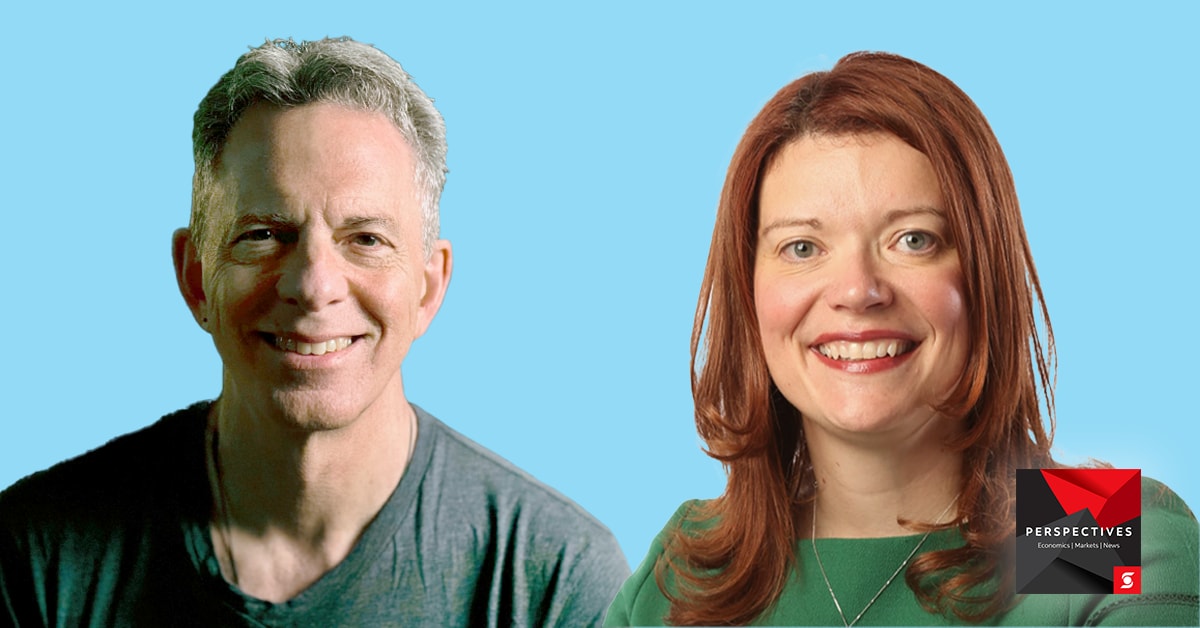
In this episode, we walk through the ins and outs of modern-day philanthropy with Jacqui Allard, the Group Head of Global Wealth Management and co-executive sponsor of Scotiabank’s Employee Giving Campaign. She has tips on how to simplify and maximize donations, how to figure out where to give, how giving can factor into estate planning at any level and more.
For legal disclosures, please visit http://bit.ly/socialdisclaim and www.gbm.scotiabank.com/disclosures
Key moments this episode:
1:14 – The role charitable giving has played in Jacqui’s life and the three pillars that are important to her when it comes to philanthropy
2:53 – What Jacqui would say to someone who might say, ‘I’m not wealthy, how can I think about giving?’
3:32 – Why it’s important to give
4:03 – How people should decide where to give their money or time
4:57 – Tips of making regular giving easier
6:55 – How philanthropy can play into overall wealth planning
8:57 – The role charitable giving can factor into estate planning
9:37 – Jacqui tells us about the Scotiabank Employee Giving campaign
11:28 – The key takeaway from this discussion
Related content


Scotiabank Advice+



Stephen Meurice: The holiday season is just about upon us. A time for entertaining. Shopping. And for many – charitable giving.
Jacqui Allard: I think ultimately, every single one of us has a capacity to give at some level.
SM: That’s Jacqui Allard, the Group Head of Global Wealth Management at Scotiabank. And according to Jacqui, giving can mean far more than just writing a cheque.
JA: Really at the end of the day, it's about recognizing what are the different ways that you personally have to give back. Whether that's your time or your money or something else, and then really doing it with something that you truly care about on a personal level.
SM: Jacqui, along with Paul Scurfield, the Global Vice President and Global Head of Capital Markets, are the executive sponsors of Scotiabank’s Employee Giving Campaign. So, Jacqui’s our guest this episode, and she’ll walk Armina Ligaya through the ins and outs of modern-day philanthropy. She’ll give us some tips on how to simplify and maximize donations, how to figure out where to give, how giving can factor into estate planning at any level, and more. I’m Stephen Meurice and this is Perspectives. Now, here’s Armina Ligaya.
Armina Ligaya: Jacqui, welcome to the show.
JA: Thank you. It's great to be here.
AL: So, we're going to talk about how charitable giving can fit into financial and estate planning. But first let's start with you. What role has charity or volunteering played in your own life?
JA: Charity and volunteering was really drilled into me from a very early age. It’s something that my parents believed deeply in, and something that I've tried to practice throughout my life. As I got older, giving back, of course, included more about giving financially, but it also meant volunteering in not-for-profit boards and other organizations that I care about. Over time, I thought about giving as really rooted in three main pillars. So, the first pillar for me was about creating opportunity or financial inclusion. It includes things like a bursary that I support at my university, trying to make access to university education something that any deserving student can aspire to regardless of their financial background. Overcoming homelessness, creating opportunities for employment for newcomers, things like that. The second area for me that's really important is the arts. I'm a great lover of, especially the visual arts, and I've over the years given to different charities. Things like Nia [Centre for the Arts], for example, which provides black youth with access to art education and opportunities for artistic expression. And then the third pillar for me is around mental health and access to mental health services, as well as things that promote cutting edge research in mental health areas. I'm passionate about us continuing to advance our knowledge about areas of mental health and ensuring that people have again, access to the services that they need. So for me, I think really at the end of the day, it's about recognizing what are the different ways that you personally have to give back, whether that's your time or your money or something else, and then really doing it with something that you truly care about on a personal level.
AL: That brings me to my next question. Because for some people they might think, ‘Well, I'm not wealthy. How can I think about giving?’ What would you say to that person?
JA: Yeah, I think that's really important. As I said, if for me it was something that was grounded in me at a very early age. It meant, you know, giving away part of my allowance or volunteering some of my time as a young person. Really, giving is a deeply personal choice, and each of us has to determine what their own capacity is for giving. But, I would argue that all of us have the capacity to give at some level, whether it's money, whether it's our time, whether it's our talents, access to our networks, all of those things are really important. So, each of us can just think about what is our own opportunity to pay it forward? Knowing that any of those things can really make a difference in a community.
AL: Maybe at a broader level, why give? Why is it important to give?
JA: I think the simple answer to that is because we can. And giving for each of us is a highly personal choice. You have to do what makes sense for you. What's impactful for you. That decision to give doesn't have to be about money. Most of us can afford to give something, but it doesn't have to be about money. It can also be about your time. It can be about sharing your experience. It can be about opening up your networks. So that would be my answer. I think all of us have the capacity to give at some level. Because we can, we should.
AL: So, you've talked about the causes that are close to your heart. How should people decide where they want to give their money or their time?
JA: For many of us I think it's something that evolves over time. Through our experience, through causes that become apparent to us as we live our lives and we see what those in the community or people in our families or our circles deal with. And then responding to that in the ways that we can. But there's a lot of ways that we can find out about charities that need us. You know, here at Scotiabank, of course, we have our Spark platform, which we use for our employee giving campaign. It's available to employees all year long. And not only does it connect us to 2.3 million different organizations on that platform, but it helps us to really hone in on, based on certain themes, certain locations, what is our opportunity for volunteering? What is our opportunity to give? And how can we get involved?
AL: So, on a maybe smaller scale in terms of how people can give, do you have any tips to make it easier? Like one example could be payroll deductions.
JA: Yeah, I think it doesn't have to be complicated. We can all kind of get started in a way that is easy and makes sense for us. I think payroll deduction for many people is just something that makes it easy. You sign up for it. It happens pre-tax. That donation basically is included in your T4. You don't have to worry about deducting it from your income tax at the end of the year. As I said, many companies like Scotiabank have access to employee giving platforms like the Benevity platform that Spark is based on. Spark will allow you to either sign up for payroll deduction or one-time donations. But it also makes it easy for you because if you do those one-time donations, at the end of the year, you have one place to go for all of your receipts for your income tax purposes. So again, it makes it really easy. Many organizations like ours also have matching opportunities. So, we have 300 ScotiaRISE partners on Spark. Many of those partners will run campaigns through the year. We'll be doing a number of them through December, where employees can not only see the impact of their own donation, but can also have that donation matched by the company dollar for dollar, up to a certain amount. I think that's just a really exciting way to sort of compound your impact, compound your gift, which is great. So again, I think there's a lot of ways that you could do it. It doesn't have to be hard. It can be really, really easy. And at the end of the day, take advantage of the tools that are available to us to do it.
AL: Yeah, I've taken advantage of that donation matching as well. It's nice to be able to see how you can maximize your donation to a cause, when often it's a crisis situation. There's a disaster somewhere and so it's nice to be able to help doubly.
JA: Yeah, I mean, that has become so evident recently with Hurricane Melissa and the opportunities we have to assist our own employees and their families, clients, the community with the terrible devastation that's happened in Jamaica. There are two organizations featured on our Spark platform to allow employees to give to those on the ground really making a difference, helping to provide access to food and shelter. But also, will help to support the rebuilding effort in Jamaica, which is so important.
AL: Absolutely. So how about looking at the bigger picture? How does philanthropy play into your overall financial planning?
JA: Well, I mean, that's obviously a question that's near and dear to me. I'm a group head of wealth management here. And financial planning is central to everything that we do. We really lead with financial planning as part of a holistic wealth advice. So, philanthropy plays a massive role in financial planning. Many of our clients build giving in to their financial plans, either as part of their annual giving or as part of their legacy. For many of our clients, leaving a legacy involves their family members. It often involves their next generation as well. They may enshrine these wishes through personal or family foundation structures. I'll use Aqueduct as an example. Aqueduct is part of Scotiatrust. It was founded in 2006, and it's become one of Canada's largest foundations, with $1.1 billion. Aqueduct Foundation’s mission is really to facilitate personal philanthropy and serve as a bridge to other charities. Donating funds or passion assets can be complex, but those challenges can be very easy to navigate with the help of experts. And the Aqueduct team supports clients and their families throughout the entire process, really ensuring that every donation is made with intention and purpose. So, it's a really important part of the wealth advisory services that we provide as a firm. And, you know, you don't really need to be a massive donor to participate in something like Aqueduct. Many of our clients simply set up a family foundation to help structure their annual giving or include that as part of their legacy. The team is just there to set up the structure, to help act on behalf of the family and to carry out their wishes.
AL: And you referred to passion assets. So those are assets that are art collectibles, correct?
JA: Yeah. That's right. So, we have an art and collectibles advisory group within our Scotiatrust team that really helps advise collectors on ways that they can leverage their collection for a greater purpose. So that again, might be as part of their current financial planning. But it could also be as part of their legacy giving. Those things can be complex. You have to think about valuation, protection of assets. You have to think about insurance, things like that. And our team is very well equipped to help people consider the best and greatest opportunity they have.
AL: And what about estate planning? How does charitable giving factor into that?
JA: Well, just like with financial planning, philanthropy can be a really important part of estate planning. It's really around creating a legacy. For many of our clients, legacy is important to them. It also enables them to set forth their wishes of how they want their money donated, not just during their lifetime, but after their passing. Many of these foundations can be multi-generational in nature, and again, depending on the family, the next gen can be very involved in continuing to run the foundation, or they can be more hands off depending, again, on the wishes of the client and how they've set up that charitable trust. But really, it's around utilizing philanthropy to create a legacy that goes well beyond your lifetime.
AL: Maybe let's talk a bit more about the Scotiabank Employee Giving Campaign. Can you tell us a bit about that and your role in it?
JA: Yeah, so this is the first year where I have been the executive co-champion of the campaign. And I've been with Scotiabank for a little bit more than two years. I asked the end of last year to take this role, and I was really excited to do it. I'd seen the campaign from afar, if you will. I participated in it last year, but I wasn't directly involved in it. But getting up close and personal, it's been truly inspiring. It's inspiring, first of all, just to see the incredible passion that our team puts into it, like running a campaign of this scale and scope and magnitude, when you consider the international footprint of Scotiabank, this campaign has run on an international level for now three years. This is the third year, is inspiring in and of itself. It's been amazing also, the people you get to meet through being involved with the campaign and seeing their personal stories of getting involved, truly rolling up their sleeves and making a difference, it's really wonderful to see. But what I love about it is that it's not, again, it's not just about the dollars. The dollars of course, they're incredibly important, incredibly important to the community. Last year, we raised just over $17 million. But it's not just about the dollars. Last year, we also tracked 250,000 volunteer hours that our employees went on to Spark to track and ensure that we understood where they were dedicating their own time. And those volunteer hours were matched through dollar contributions from Scotiabank. So, I think both the giving with your time and your passion and your personal talents and your hands-on volunteerism is super inspiring, as is employees that year after year choose to give back whether it's at the leadership level, the MIG [major individual giving] level, incredible generosity on display. And so, I'm excited about it. As I said last year, we raised just over $17 million. This year we have a goal for $18 million. We're off to an amazing start already and I'm really excited. I know that we're going to have a wonderful year and we're going to make a big difference in our communities as a result.
AL: Yeah, definitely so many different ways that you can make an impact. What's the one main thing you want people to take away from this discussion?
JA: I think the thing I'd really want people to take away is that ultimately, every single one of us has a capacity to give at some level. And again, whether that's of your time, of your talent and your experience of your network, of your dollars, all of those things make a difference in the community. And so, I would just encourage everybody listening to think about what would be meaningful to them personally, and how do they really want to contribute to make a difference?
AL: Jacqui, thanks again for joining us today to talk about the importance of giving.
JA: Thank you. It was great to be here.
AL: I’ve been speaking with Jacqui Allard, she’s the Group Head of Global Wealth Management at Scotiabank.
La transcription suivante a été générée à l'aide de la traduction automatique.
Stephen Meurice : La saison des Fêtes approche à grands pas. Un moment pour divertir. Magasinage. Et pour beaucoup – des dons caritatifs.
Jacqui Allard : Je pense qu'en fin de compte, chacun de nous a la capacité de donner à un certain niveau.
SM : C'est Jacqui Allard, chef de groupe de la gestion mondiale de patrimoine chez Scotiabank. Et selon Jacqui, donner peut signifier bien plus que simplement écrire un chèque.
JA : Au bout du compte, il s'agit de reconnaître quelles sont les différentes façons dont vous devez personnellement redonner. Que ce soit ton temps, ton argent ou autre chose, et ensuite vraiment le faire avec quelque chose qui te tient vraiment à cœur sur le plan personnel.
SM : Jacqui, avec Paul Scurfield, vice-président mondial et chef mondial des marchés de capitaux, sont les commanditaires exécutifs de la campagne de dons pour employés de Scotiabank. Alors, Jacqui est notre invitée dans cet épisode, et elle expliquera à Armina Ligaya les tenants et aboutissants de la philanthropie moderne. Elle nous donnera quelques conseils sur la façon de simplifier et maximiser les dons, comment déterminer où donner, comment le don peut jouer un rôle dans la planification successorale à tous les niveaux, et plus encore. Je suis Stephen Meurice et voici Perspectives. Voici Armina Ligaya.
Armina Ligaya : Jacqui, bienvenue dans l'émission.
JA : Merci. C'est super d'être ici.
AL : Nous allons donc parler de la façon dont les dons caritatifs peuvent s'intégrer à la planification financière et successorale. Mais commençons d'abord par vous. Quel rôle la charité ou le bénévolat ont-ils joué dans votre propre vie?
JA : La charité et le bénévolat m'ont vraiment été inculqués dès mon plus jeune âge. C'est quelque chose en quoi mes parents croyaient profondément, et que j'ai essayé de pratiquer toute ma vie. En vieillissant, redonner à la communauté, bien sûr, incluait davantage de dons financiers, mais cela signifiait aussi faire du bénévolat dans des conseils d'administration d'organismes à but non lucratif et d'autres organisations qui me tiennent à cœur. Avec le temps, j'ai pensé que le don était vraiment ancré dans trois piliers principaux. Donc, pour moi, le premier pilier portait sur la création d'opportunités ou l'inclusion financière. Cela inclut des choses comme une bourse que je soutiens à mon université, essayer de rendre l'accès à l'éducation universitaire quelque chose auquel tout étudiant méritant peut aspirer, peu importe son milieu financier. Surmonter l'itinérance, créer des opportunités d'emploi pour les nouveaux arrivants, ce genre de choses. Le deuxième domaine qui est vraiment important pour moi, ce sont les arts. Je suis un grand amateur, surtout des arts visuels, et au fil des ans, j'ai donné à différents organismes de bienfaisance. Des choses comme Nia [Centre for the Arts], par exemple, qui offre aux jeunes noirs un accès à l'éducation artistique et des occasions d'expression artistique. Et pour moi, le troisième pilier concerne la santé mentale et l'accès aux services de santé mentale, ainsi que les initiatives qui favorisent la recherche de pointe dans les domaines de la santé mentale. Je suis passionnée par le fait que nous poursuivions nos connaissances sur les domaines de la santé mentale et que les gens aient à nouveau accès aux services dont ils ont besoin. Donc pour moi, je pense qu'au final, il s'agit de reconnaître quelles sont les différentes façons dont on peut personnellement redonner, que ce soit son temps, son argent ou autre chose, puis de vraiment le faire avec quelque chose qui compte vraiment pour toi personnellement.
AL : Cela m'amène à ma prochaine question. Parce que pour certains, ils pourraient penser : « Eh bien, je ne suis pas riche. Comment puis-je penser à donner? » Que diriez-vous à cette personne?
JA : Oui, je pense que c'est vraiment important. Comme je l'ai dit, si pour moi c'était quelque chose qui m'a été ancré très jeune. Ça voulait dire, tu sais, donner une partie de mon argent de poche ou faire du bénévolat quand j'étais jeune. En réalité, donner est un choix profondément personnel, et chacun de nous doit déterminer sa propre capacité à donner. Mais, je dirais que nous avons tous la capacité de donner à un certain niveau, que ce soit l'argent, notre temps, nos talents, l'accès à nos réseaux, toutes ces choses sont vraiment importantes. Donc, chacun de nous peut simplement réfléchir à sa propre opportunité de rendre la pareille? Savoir que n'importe laquelle de ces choses peut vraiment faire une différence dans une communauté.
AL : Peut-être qu'à un niveau plus large, pourquoi donner? Pourquoi est-ce important de donner?
JA : Je pense que la réponse simple, c'est parce que nous pouvons. Et donner pour chacun de nous est un choix très personnel. Tu dois faire ce qui a du sens pour toi. Qu'est-ce qui a un impact pour toi. Cette décision de donner n'a pas à être une question d'argent. La plupart d'entre nous peuvent se permettre de donner quelque chose, mais ce n'est pas obligé d'être une question d'argent. Cela peut aussi être une question de votre temps. Il peut s'agir de partager ton expérience. Il peut s'agir d'ouvrir vos réseaux. Voilà donc ma réponse. Je pense que nous avons tous la capacité de donner à un certain niveau. Parce qu'on peut, on devrait.
AL : Vous avez parlé des causes qui vous tiennent à cœur. Comment les gens devraient-ils décider où ils veulent donner leur argent ou leur temps?
JA : Pour beaucoup d'entre nous, je pense que c'est quelque chose qui évolue avec le temps. Par notre expérience, par des causes qui deviennent évidentes pour nous au fil de notre vie et à ce que nous voyons ce que vivent les membres de la communauté, les membres de nos familles ou de nos cercles. Et ensuite répondre à cela de la façon dont nous le pouvons. Mais il y a beaucoup de façons de découvrir des organismes de bienfaisance qui ont besoin de nous. Vous savez, ici à Scotiabank, bien sûr, nous avons notre plateforme Spark, que nous utilisons pour notre campagne de dons aux employés. Il est disponible pour les employés toute l'année. Et non seulement cela nous connecte à 2,3 millions d'organisations différentes sur cette plateforme, mais cela nous aide aussi à vraiment nous concentrer, selon certains thèmes, certains endroits, quelles sont nos opportunités de bénévolat? Quelle est notre opportunité d'offrir? Et comment pouvons-nous nous impliquer?
AL : Donc, à une échelle peut-être plus petite en termes de moyens de donner, avez-vous des conseils pour faciliter les choses? Un exemple pourrait être les déductions sur la paie.
JA : Oui, je pense que ça n'a pas besoin d'être compliqué. On peut tous commencer d'une façon simple et logique pour nous. Je pense que pour beaucoup de gens, la déduction sur la paie est juste quelque chose qui facilite les choses. Tu t'inscris pour ça. Ça arrive avant impôt. Ce don est essentiellement inclus dans votre T4. Vous n'avez pas à vous inquiéter de le déduire de votre impôt sur le revenu à la fin de l'année. Comme je l'ai dit, plusieurs entreprises comme Scotiabank ont accès à des plateformes de dons pour employés, comme la plateforme Benevity sur laquelle Spark est basé. Spark vous permettra soit de vous inscrire à une déduction de paie, soit à des dons ponctuels. Mais cela facilite aussi la tâche parce que si vous faites ces dons ponctuels, à la fin de l'année, vous n'avez qu'un seul endroit où aller pour tous vos reçus pour vos impôts. Donc, encore une fois, ça rend les choses vraiment faciles. Beaucoup d'organisations comme la nôtre offrent aussi des opportunités de jumelage. Donc, nous avons 300 partenaires ScotiaRISE sur Spark. Beaucoup de ces partenaires mèneront des campagnes tout au long de l'année. Nous en ferons plusieurs jusqu'en décembre, où les employés pourront non seulement voir l'impact de leur propre don, mais aussi voir ce don égalé par l'entreprise dollar pour dollar, jusqu'à un certain montant. Je pense que c'est une façon vraiment excitante de renforcer ton impact, de renforcer ton don, ce qui est génial. Donc, encore une fois, je pense qu'il y a beaucoup de façons de le faire. Ça n'a pas besoin d'être difficile. Ça peut être vraiment, vraiment facile. Et au bout du compte, profitez des outils à notre disposition pour y parvenir.
AL : Oui, j'ai aussi profité de cette correspondance de dons. C'est agréable de voir comment on peut maximiser son don à une cause, alors que souvent c'est une situation de crise. Il y a un désastre quelque part, alors c'est agréable de pouvoir aider doublement.
JA : Oui, je veux dire, c'est devenu tellement évident récemment avec l'ouragan Melissa et les occasions que nous avons d'aider nos propres employés, leurs familles, leurs clients, la communauté à gérer la terrible dévastation qui a eu lieu en Jamaïque. Deux organisations sont présentées sur notre plateforme Spark pour permettre aux employés de contribuer à ceux qui sont sur le terrain, faisant vraiment une différence, en aidant à offrir un accès à la nourriture et au logement. Mais elle aidera aussi à soutenir l'effort de reconstruction en Jamaïque, ce qui est si important.
AL : Absolument. Alors, pourquoi ne pas regarder la situation dans son ensemble? Comment la philanthropie influence-t-elle votre planification financière globale?
JA : Eh bien, c'est évidemment une question qui me tient à cœur. Je suis chef de groupe de gestion de patrimoine ici. Et la planification financière est au cœur de tout ce que nous faisons. Nous menons vraiment par la planification financière dans le cadre d'un conseil patrimonial holistique. Ainsi, la philanthropie joue un rôle majeur dans la planification financière. Beaucoup de nos clients intègrent la donation dans leurs plans financiers, soit dans le cadre de leur don annuel, soit dans leur héritage. Pour plusieurs de nos clients, laisser un héritage concerne les membres de leur famille. Cela implique souvent aussi leur prochaine génération. Ils peuvent consacrer ces souhaits à travers des structures de fondation personnelles ou familiales. Je vais prendre Aqueduc comme exemple. Aqueduc fait partie de Scotiatrust. Elle a été fondée en 2006 et est devenue l'une des plus grandes fondations du Canada, avec 1,1 milliard de dollars. La mission de la Fondation Aqueduc est vraiment de faciliter la philanthropie personnelle et de servir de pont vers d'autres organismes de bienfaisance. Donner des fonds ou des actifs de passion peut être complexe, mais ces défis peuvent être très faciles à surmonter avec l'aide d'experts. Et l'équipe d'Aqueduct soutient les clients et leurs familles tout au long du processus, s'assurant vraiment que chaque don est fait avec intention et intention. C'est donc une partie très importante des services de conseil en gestion de patrimoine que nous offrons en tant qu'entreprise. Et, vous savez, vous n'avez pas vraiment besoin d'être un donateur massif pour participer à quelque chose comme Aqueduct. Beaucoup de nos clients créent simplement une fondation familiale pour structurer leur don annuel ou l'incluent dans leur héritage. L'équipe est simplement là pour mettre en place la structure, aider à agir au nom de la famille et réaliser leurs volontés.
AL : Et vous avez parlé des atouts passionnés. Donc, ce sont des assets qui sont des objets de collection d'art, c'est bien ça?
JA : Oui. C’est vrai. Nous avons donc un groupe consultatif d'art et d'objets de collection au sein de notre équipe Scotiatrust qui aide vraiment les collectionneurs à exploiter leur collection pour un objectif plus grand. Donc, encore une fois, ça pourrait faire partie de leur planification financière actuelle. Mais cela pourrait aussi faire partie de leur héritage. Ces choses peuvent être complexes. Il faut penser à l'évaluation, à la protection des actifs. Il faut penser à l'assurance, ce genre de choses. Et notre équipe est très bien équipée pour aider les gens à envisager la meilleure et la plus grande opportunité qu'ils ont.
AL : Et qu'en est-il de la planification successorale? Comment les dons de bienfaisance s'intègrent-ils là-dedans?
JA : Eh bien, tout comme en planification financière, la philanthropie peut être une partie très importante de la planification successorale. Il s'agit vraiment de créer un héritage. Pour plusieurs de nos clients, l'héritage est important pour eux. Cela leur permet aussi d'exprimer leurs souhaits quant à la façon dont ils souhaitent que leur argent soit donné, non seulement de leur vivant, mais aussi après leur décès. Beaucoup de ces fondations peuvent être multigénérationnelles, et encore une fois, selon la famille, la prochaine génération peut être très impliquée dans la gestion de la fondation, ou elle peut être plus discrète selon les souhaits du client et la façon dont il a mis en place cette fondation. Mais en réalité, il s'agit d'utiliser la philanthropie pour créer un héritage bien au-delà de votre vie.
AL : Parlons peut-être un peu plus de la campagne de dons des employés de la Banque Scotia. Pouvez-vous nous parler un peu de cela et de votre rôle là-dedans?
JA : Oui, donc c'est la première année où je suis la co-championne exécutive de la campagne. Et je travaille à Scotiabank depuis un peu plus de deux ans. J'ai demandé à la fin de l'année dernière d'accepter ce rôle, et j'étais vraiment enthousiaste à l'idée de le faire. J'avais vu la campagne de loin, si on veut. J'y ai participé l'an dernier, mais je n'y ai pas été directement impliqué. Mais en s'approchant de près et en personne, ça a vraiment été inspirant. C'est inspirant, d'abord, de voir la passion incroyable que notre équipe y met, comme mener une campagne de cette ampleur, de cette ampleur, quand on considère l'empreinte internationale de Scotiabank, cette campagne se déroule à l'échelle internationale depuis maintenant trois ans. C'est la troisième année, c'est inspirant en soi. C'est aussi incroyable, les gens qu'on rencontre en participant à la campagne et en voyant leurs histoires personnelles de participation, de vraiment retrousser leurs manches et de faire une différence, c'est vraiment merveilleux à voir. Mais ce que j'aime, c'est que ce n'est pas, encore une fois, ce n'est pas juste une question d'argent. Les dollars, bien sûr, sont incroyablement importants, incroyablement importants pour la communauté. L'an dernier, nous avons amassé un peu plus de 17 millions de dollars. Mais ce n'est pas seulement une question d'argent. L'an dernier, nous avons également suivi 250 000 heures de bénévolat que nos employés ont ensuite rejointes chez Spark pour nous assurer de comprendre où ils consacraient leur propre temps. Et ces heures de bénévolat ont été jumelées par des contributions financières de la Banque Scotia. Donc, je pense que le fait de donner avec son temps, sa passion, ses talents personnels et son bénévolat pratique sont super inspirants, tout comme les employés qui, année après année, choisissent de redonner, que ce soit au niveau du leadership, du MIG [grand don individuel], une générosité incroyable affichée. Alors, je suis enthousiaste à ce sujet. Comme je l'ai dit l'an dernier, nous avons amassé un peu plus de 17 millions de dollars. Cette année, nous avons un objectif de 18 millions de dollars. On commence déjà de façon incroyable et je suis vraiment excité. Je sais que nous allons passer une année merveilleuse et que nous allons faire une grande différence dans nos communautés grâce à cela.
AL : Oui, il y a vraiment tellement de façons différentes d'avoir un impact. Quelle est la principale chose que vous voulez que les gens retiennent de cette discussion?
JA : Je pense que ce que je voudrais vraiment que les gens retiennent, c'est qu'au final, chacun d'entre nous a la capacité de donner à un certain niveau. Et encore une fois, que ce soit à cause de votre temps, de votre talent, de votre expérience, de votre réseau, de votre argent, toutes ces choses font une différence dans la communauté. Donc, j'encouragerais tout le monde à réfléchir à ce qui pourrait être significatif pour eux personnellement, et comment ils veulent vraiment contribuer pour faire une différence.
AL : Jacqui, merci encore de vous joindre à nous aujourd'hui pour parler de l'importance du don.
JA : Merci. C'était génial d'être ici.
AL : J'ai discuté avec Jacqui Allard, elle est chef du groupe gestion mondiale de patrimoine chez Scotiabank.
